
No. 5 ranked Ultimate Fighting Championship (UFC) Middleweight contender, Mark Munoz, welcomes former Light Heavyweight champion, Lyoto Machida, to the 185-pound division this Saturday (Oct. 26, 2013) in main event of UFC Fight Night 30, which takes place from Phones 4U Arena in Manchester, England.
Munoz had an excellent start to his mixed martial arts (MMA) career, defeating his first five opponents. However, he lost his Octagon debut via knockout to Matt Hamill, causing him to drop a weight class. It turned out to be a wise decision, as he won three straight fights. He was close to a 185-pound title shot, but a loss to Yushin Okami sent him back down the ladder.
Four straight victories, including two technical knockout victories, earned Munoz a top contender's match with Chris Weidman. Unfortunately for "Filipino Wrecking Machine," Weidman brutally knocked him out. Munoz took almost a year off to recover from injuries. During this time, Munoz became depressed (AND FAT), but made an inspirational comeback, returning to the Octagon in the best shape of his career.
In his return, Munoz put a f15-minute beating on Tim Boestch. After his original opponent, Michael Bisping, pulled out with an eye injury (more details here), "The Dragon" offered to fill in. Can Munoz get the most high-profile victory in his career?
Let's take a closer look:
Striking
Munoz is more of a brawler than a boxer. He's aggressive on the feet, charging his opponents with powerful shots. His defense suffers due to his inexperience and aggression, but he also can force his opponents to shell up under his onslaught.
"The Filipino Wrecking Machine" occasionally uses the jab. He throws it like many average fighters in terms of technique, but he doesn't really use it to set up his other strikes. When he does throw a jab or two, he often follows it up with a straight right hand.
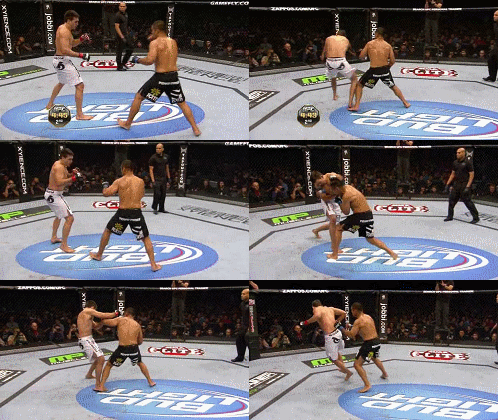
Munoz's right cross is fairly powerful, and he should throw it more often. He frequently lands it when he throws his right as a lead, mostly due to its ability to cover distance. In his fight with CB Dollaway, his right hand slipped by Dollaway's left hook, crushing "The Doberman." For once, it was Munoz landing the knockout off of a straighter shot, rather than his opponent.
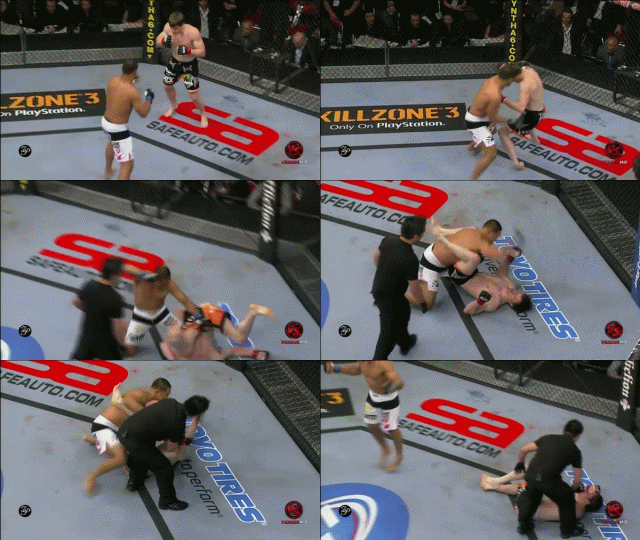
More often than not, Munoz will charge his opponent with a barrage of left and right hooks. When he starts flinging hooks, he does a good job turning his hips into them, which gives them power. If his opponent starts to duck, Munoz will follow his left hook with a right uppercut.
Munoz lands his best strikes from the clinch. Even in close, Munoz gets good torque on his hooks to the head, body, and even the legs. He switches up targets frequently and will mix in hard knees to further make his attack more unpredictable. If he feels his opponent covering up, Munoz will back out from the clinch and land harder shots. Additionally, at close range, his opponent has a harder time catching him lunging in.
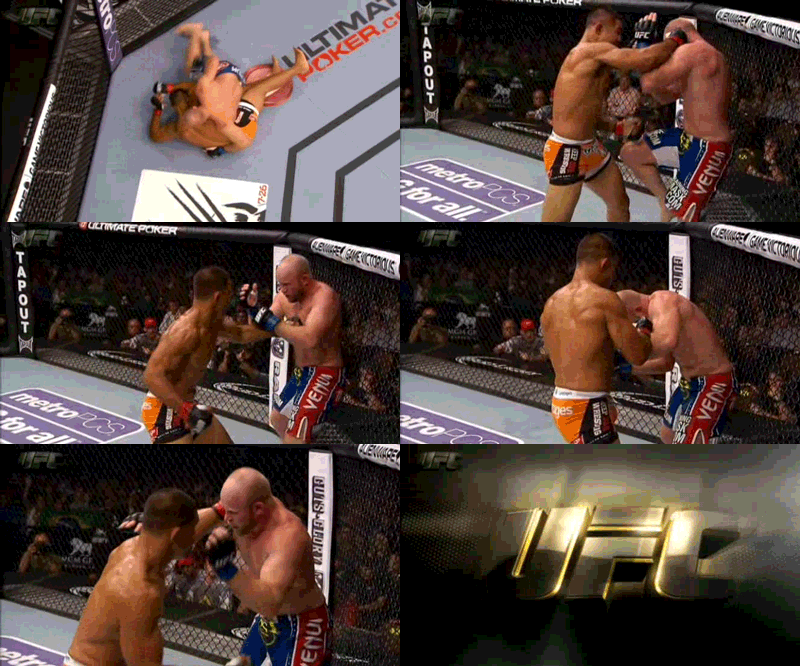
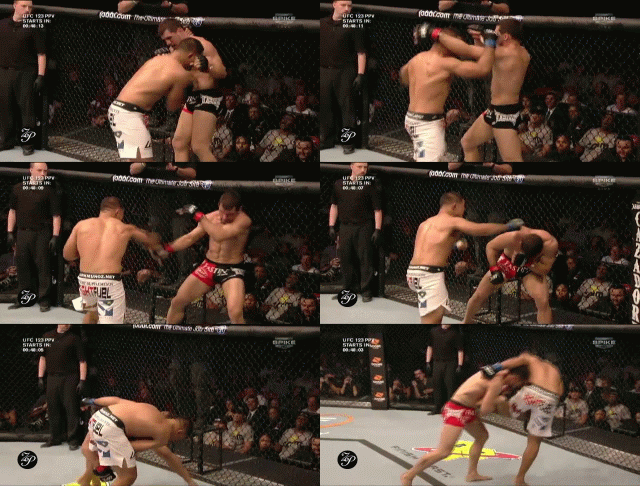
Munoz's striking defense has long been his greatest flaw. Not only does he lung in with punches, which is always risky, but he leads with his face, meaning he doesn't move his head of the center line as he attacks.
This makes him exceptionally easy to counter, a poor trait to have against Machida.
Chris Weidman's counter elbow KO wouldn't have been possible if Munoz kept his back. In addition to this finish, Munoz nearly got finished by a massive Kendall Grove uppercut because of the same problem. If Munoz wants to defeat Machida, he needs to seriously work on his defense.
Wrestling
A two-time All-American wrestler and NCAA champion, Munoz has some of the best wrestling credentials in the UFC. While he hasn't always looked the part, there's no denying Munoz is an extraordinarily talented wrestler.
Munoz loves to blast through his opponents with double legs. His initial blast is quite powerful, and he's able to cut a corner if his opponent can defend the initial drive. Munoz prefers to hit his takedowns in the center of the Octagon, but he can wrestle against the cage as well. If neither the blast or corner turn work, Munoz can transition to a single leg and attempt to finish that.
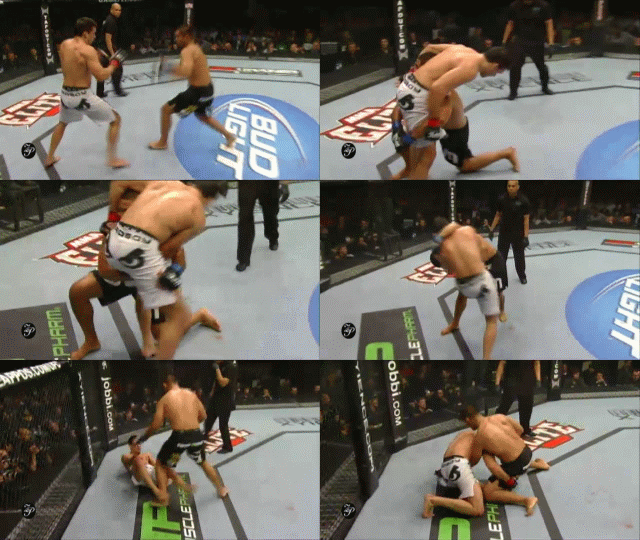
Munoz has a pretty low takedown completion percentage (27% according to Fightmetric). This is not because he is a bad wrestler, he simply is very determined. Munoz does not give up on his attempts, repeatedly shooting for doubles even if his opponent consistently stuffs them. This determination is very respectable and is likely a big part of Munoz's success.
The Kings MMA-trained fighter may actually be better from the clinch. He has a very sneaky inside trip that he hit on Tim Boestch twice in their recent fight. Both times, he controlled "The Barbarian" with double underhooks before thrusting his leg between Boestch's and leaning in.
It's hard to describe, but Munoz is an expert at scrambling, something that comes from years of grappling experience. When Munoz can force a situation where the outcome favors the man with quicker muscle memory, he generally wins. In the below GIF, Munoz is able to slide under Simpson and out the back door almost immediately. This was not really a pure wrestling or jiu-jitsu technique, just Munoz getting an underhook and being quicker than Simpson.
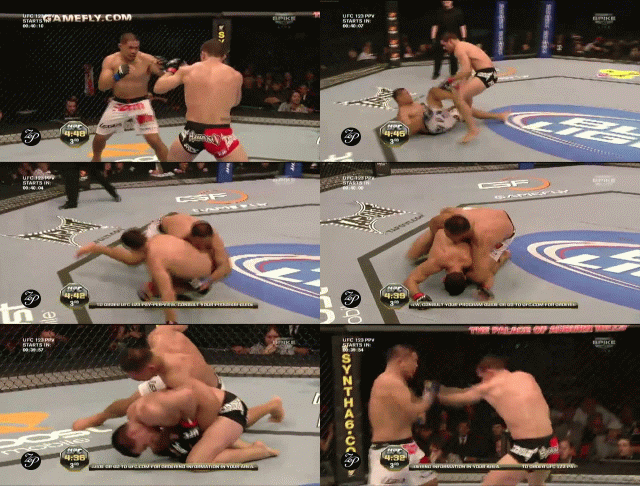
The highlight of Munoz's game is absolutely his monstrous ground striking. It's so good it has its own nickname, "Donkey Kong ground and pound." The key to Munoz's destructive ground striking is his ability to create space then land punches with his entire body.
Once Munoz gets on top of his opponent, he immediately begins trying to posture and break guard. He loves to stand over his opponent's guard, force their hips back, then blast them with long punches. An important trait about Munoz's ground and pound is that once he begins throwing hammers, he doesn't stop. He'll stand above his opponent and drop bombs until they change position or the ref stops the fight, Munoz refuses to hold back.

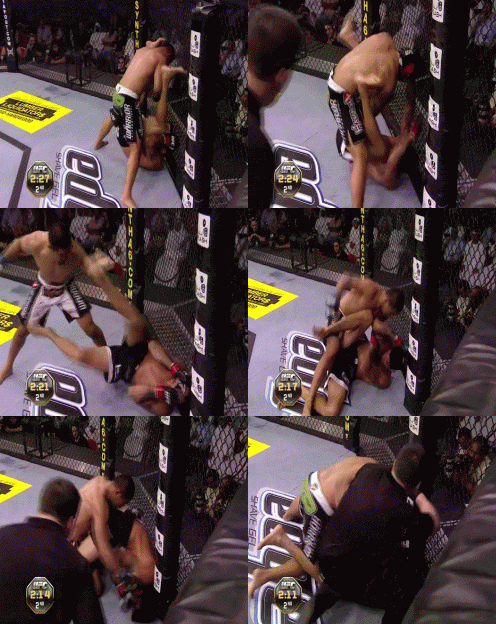
One of Munoz's best positions to work from is the turtle. From the turtle, Munoz will drop bombs on his opponents with shots to the body and head, frequently shifting targets. Recently, Munoz repeatedly cracked Boestch's body with winging punches from this position, as well as when he sprawled out on top of Boestch.
There are downsides to throwing ground and pound with as much vehemence as Munoz. He often allows his opponents to stand back up in order to land a few extra punches. Against someone who's a better striker than him or is difficult to takedown, this is a obviously a problem. Unfortunately, Machida is both of these.
Look below at Munoz allowing Leben stand up in order to land a couple of punches. Leben is was moving at his normal speed, which is quite slow, and he was still able to get back to his feet repeatedly.

Munoz's takedown defense is a bit enigmatic. Sometimes, he's able to cause scrambles, reverse position, or at least return to his feet. Other times, he seems completely unable to do much of anything, like in his loss to Weidman. Now, Weidman is a spectacular grappler and deserves credit for controlling Munoz, but it's not the first time that has happened. In fact, even "The Crippler" managed to drag Munoz down to the mat at one point.
Brazilian Jiu-Jitsu
Munoz is a purple belt in jiu-jitsu but has yet rarely displays it inside the Octagon. He didn't get famous for ground striking by trying to choke his opponent. As far as I can remember, Munoz has never had any truly significant submission attempts.
One thing that Munoz does display is astoundingly good submission defense. Munoz wrestled two of middleweight's best submission artists, Demian Maia and Chris Weidman, and was able to resist all of their submission attempts. Against both men, Munoz was able to survive dangerous positions and submission attempts that would fell most grapplers.
Many fighters, including the above two, Leben, and Boestch, have all tried to finish Munoz with front chokes. Whether it be guillotines or d'arces or their many modifications, Munoz weathers the submission, patiently waiting for opportunity to slip out as he hand fights. If it's looking extremely dangerous, Munoz will start jerking side to side or spinning, anything to cause a scramble.
Best chance for success
Munoz has a monumental task ahead of him. If I were to design a fighter to capitalize on Munoz flaws while nullifying his strengths, it would be Lyoto Machida. "The Dragon" has excellent range striking and distance control, fight finishing counters, and extremely formidable takedown defense. Additionally, Machida is excellent at getting back to his feet on the rare occasion he is taken down, making it even more difficult for Munoz.
The most important thing for Munoz here is to stay patient. If he gets too aggressive with his striking and leads with his head, he will get Ryan Bader'd. Instead, he needs to focus on cutting off the Octagon with his footwork and only try to land his hooks when Machida circles around him. Both things are much easier said than done.
If Munoz ever has an opportunity to grab hold of Machida, he must hang on. Forcing Machida to wrestle, even in the clinch, will fatigue him and slow his punches. Munoz best chance is to take this into late rounds, as it's unknown how Machida will react to his middleweight debut.
Should Munoz somehow get Machida to the ground, he absolutely has to be more cautious with his striking. He can't afford to let Machida back to his feet in order to land a few ultimately meaningless shots. Controlling and tiring Machida should be his only goals until Machida fatigues.
Can Munoz overcome this adverse style match up, or will Machida be successful in his new division?

No comments:
Post a Comment